Cacao powder may seem like just another pantry staple, but it can significantly alter the taste, texture, and even the nutritional value of what you are making. Whether you are whipping up a rich chocolate cake, blending a smoothie, or experimenting with healthier desserts, the type of cacao powder you choose actually matters more than most people realize.
From natural cacao powder to Dutch-processed and raw varieties, each one has its own unique flavor profile, acidity level, and optimal use case. Some bring a deep, intense chocolate flavor, while others offer a smoother, milder taste that works perfectly in baking.
In this guide, we’ll break down the different types of cacao powder in a simple and easy-to-understand way so you can confidently pick the right one for your recipes, your health goals, and your taste preferences.
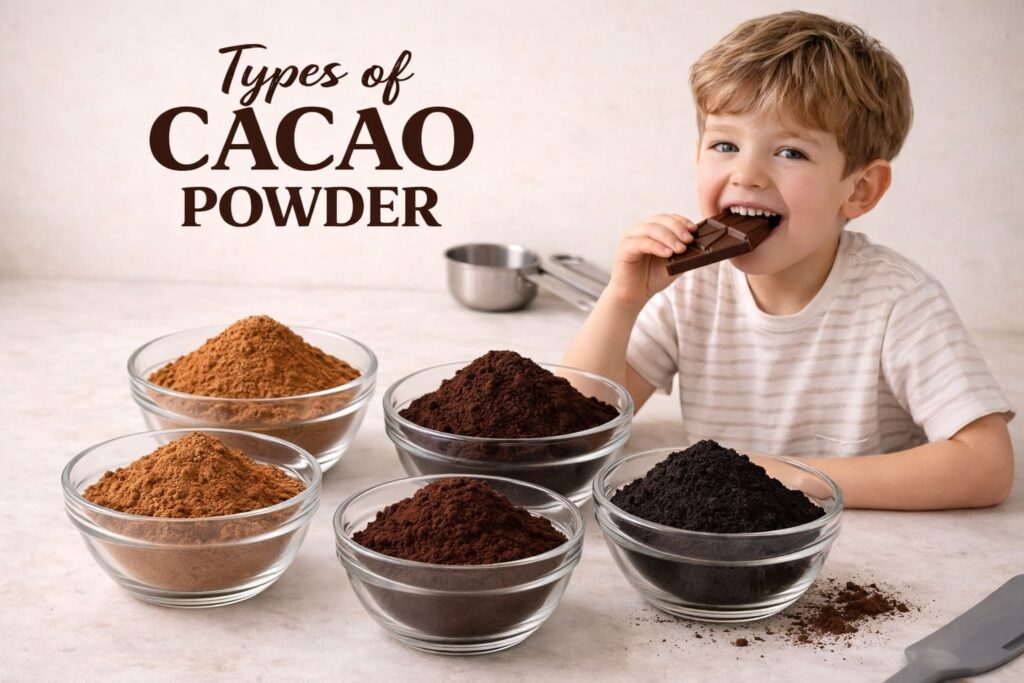
Natural Raw Cacao Powder
Natural cacao powder is the most “pure” form you’ll come across. It’s made by simply pressing cacao beans to remove most of the fat (cocoa butter) and then grinding what’s left into a fine powder without any chemical processing. That’s why it keeps its natural acidity and bold flavor.
- Flavor: Bitter, slightly acidic, with a subtle fruity note
- Color: Light brown
- Best for: Recipes that use baking soda
Because it’s acidic, natural cacao reacts with baking soda to help your baked goods rise properly. This makes it a go-to choice for recipes that rely on that chemical reaction for structure and texture.
In terms of usage, it works beautifully in cakes, brownies, and even hot chocolate, especially when you want a more intense, rich chocolate taste. Just keep in mind—it’s not as smooth or mellow as other types, so balancing it with sugar is key.
If you’re aiming for that deep, slightly sharp chocolate flavor, natural cacao powder is the one you’ll want in your kitchen.
Also Read: Cacao Powder Benefits
Dutch-Processed Cacao Powder
Dutch-processed cacao powder goes through a special treatment called the Dutching process, where it’s washed with an alkaline solution to reduce its natural acidity. This small change makes a big difference in both flavor and how it behaves in recipes.
- Flavor: Smooth, mellow, and less acidic
- Color: Darker brown, often richer in appearance
- Best for: Recipes that use baking powder
Because the acidity is neutralized, Dutch-processed cacao doesn’t react with baking soda the way natural cacao does. That’s why it’s commonly used in recipes that rely on baking powder instead.
Double-Dutch Cacao Powder
Double-Dutch cacao powder is where things get a bit more premium and indulgent. It’s typically a blend of Dutch-processed cacao and ultra-dark (black) cacao, giving you a much deeper color and a more intense chocolate experience.
- Flavor: Deep, rich, and slightly bold chocolate
- Color: Very dark, almost black in some cases
- Best for: Dark desserts and premium-style baking
This type of cacao is all about visual impact and depth of flavor. It gives baked goods that dramatic dark look you often see in high-end desserts (think Oreo-style cookies or gourmet chocolate cakes).
Since it’s heavily processed and low in acidity, it usually works best in recipes that call for baking powder or don’t rely on acidity at all.
Use it when you want your desserts to feel a bit more luxurious—perfect for dark cakes, sandwich cookies, brownies, or any recipe where you want that rich, almost intense chocolate finish.
Black Cacao Powder
Black cacao powder is the most intensely processed version out there. It goes through an extreme Dutching process, which removes almost all of its natural acidity—and with it, a lot of the sharp, bitter notes too.
- Flavor: Mild, smooth, and less bitter
- Color: Almost black, very dramatic
- Best for: Oreo-style recipes and ultra-dark cakes
What makes black cacao stand out is its signature dark color. It’s the reason cookies like Oreos have that deep black look. Flavor-wise, it’s surprisingly subtle compared to natural cacao, so it’s often combined with other cacao powders to balance taste and color.
Since it’s highly alkalized, it doesn’t react with baking soda, so it works best in recipes using baking powder or those that don’t rely on acidity.
Use it when appearance matters just as much as taste—perfect for sandwich cookies, dark-themed desserts, or anything where you want that bold, almost black finish without overwhelming bitterness.
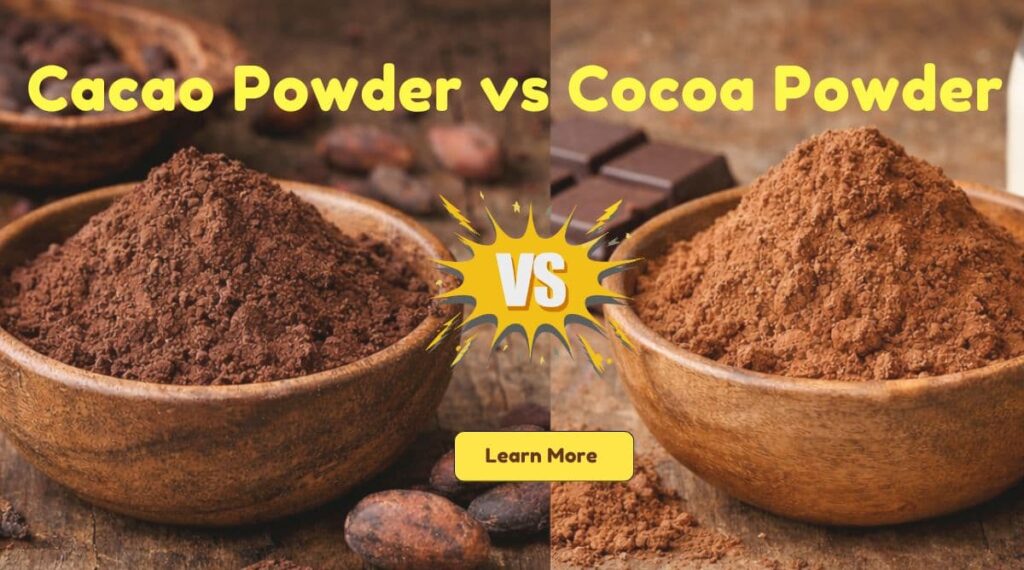
Read Also: Cacao Powder vs Cocoa Powder
Triple Blend Cacao Powder
If you don’t want to overthink which cacao powder to use every time, a triple blend cacao powder is the easiest solution. It’s a mix of natural, Dutch-processed, and black cacao, designed to give you the best of all worlds in one single ingredient.
- Blend: Natural + Dutch + Black cacao
- Flavor: Balanced—not too bitter, not too mild
- Best for: All-purpose baking
This type of cacao powder is all about convenience and consistency. You get a well-rounded chocolate flavor, a rich color, and enough balance that it works in most recipes without needing to adjust leavening agents too much.
Whether you’re baking cakes, brownies, cookies, or even making hot chocolate, this blend adapts easily. It won’t be as sharp as natural cacao or as deep as black cacao, but that’s actually the advantage. It sits right in the middle.
If you’re someone who bakes often and wants a reliable, no-confusion option, triple blend cacao powder is a smart, go-to choice for your kitchen.
Organic and Specialty Cacao Powders
If you’re someone who cares about quality, sourcing, and overall experience, organic and specialty cacao powders are worth exploring. These aren’t just about taste—they also reflect how the cacao is grown, processed, and traded.
- Organic cacao: Made without synthetic chemicals or pesticides, offering a cleaner and more natural option
- Fair trade cacao: Sourced ethically, ensuring farmers are paid fairly and work under better conditions
- Premium European-style cacao: Known for its ultra-smooth texture, deep color, and refined chocolate flavor
- Best for: Health-conscious baking, premium desserts, and anyone who values ethical and high-quality ingredients
What sets these apart is the attention to detail—from bean selection to processing methods. You’ll often notice a more refined taste, smoother texture, and better overall consistency in your recipes.
Whether you’re baking for yourself or creating something special, these cacao powders add a layer of thoughtfulness and quality that goes beyond just flavor.
Also Read: Cacao Powder Uses
Can You Substitute One Cacao Powder for Another?
This is one of the most common questions—and the honest answer is: sometimes yes, sometimes no. It all depends on how much your recipe relies on baking chemistry.
When it works
If your recipe doesn’t depend on leavening reactions (like smoothies, hot chocolate, frostings, or no-bake desserts), you can usually swap one cacao powder for another without any major issues.
The only difference you’ll notice is in flavor and color—some might taste richer, darker, or slightly more bitter.
When it doesn’t work
In baking, things get more sensitive. Recipes that use baking soda or baking powder rely on the cacao’s acidity (or lack of it).
- Swap natural cacao with Dutch by mistake → your cake might not rise properly
- Use the wrong type → texture can turn dense or slightly off
So, if you’re baking something like cakes, brownies, or cookies, it’s best to stick to what the recipe calls for—or adjust the leavening agents accordingly.
Simple rule:
If chemistry is involved, be careful. If it’s just flavor, you’ve got flexibility.
Conclusion: Choosing the Right Cacao Powder for Perfect Results
By now, it’s clear that cacao powder isn’t just one simple ingredient—it comes in different types, and each one plays a specific role in your recipes. From natural cacao for proper rise, to Dutch-processed for smooth flavor, and black or double-Dutch for that rich, dark finish—every option has its place.
If you just want to keep things easy, a blended cacao powder can handle most recipes without much thought. But when you want precision and better results, choosing the right type makes a noticeable difference in both taste and texture.
That said, don’t be afraid to experiment a little. Baking is part science, part creativity. Try different cacao powders in your favorite recipes and see how the flavor, color, and overall feel change.
Once you start noticing those small differences, you’ll naturally get better at picking the perfect cacao powder—every single time.
Top 5 FAQS About Cacao Powder Types
Which cacao powder is best for baking cakes?
It depends on the recipe. Use natural cacao if it includes baking soda, and Dutch-processed cacao if it uses baking powder.
Can I use Dutch-processed cacao instead of natural cacao?
Yes, but you may need to adjust the leavening agent. Dutch-processed cacao doesn’t react with baking soda the same way natural cacao does.
Which cacao powder is best for hot chocolate?
Natural cacao gives a stronger, richer flavor, while Dutch-processed cacao offers a smoother and less bitter taste.
Can I mix different cacao powders together?
Yes, and many bakers do this to balance flavor and color—similar to triple blend cacao powders.
Is organic cacao powder better than regular cacao powder?
Organic cacao is free from synthetic chemicals and often has cleaner sourcing, but taste-wise, it depends on personal preference.

Rylen
Writer of Ayurveda PowderRylan is a wellness writer focused on Ayurvedic powders, natural nutrition, and herbal remedies. He researches traditional ingredients and modern health science to create simple, practical guides that help readers make smarter lifestyle choices. His goal is to make Ayurveda easy to understand and useful in daily life.