If you’ve ever searched for cacao powder vs cocoa powder, chances are you ended up more confused than before. Both look almost the same, both come from chocolate beans, and both promise that rich chocolate experience — so what’s actually different? Are these just two fancy names for the same thing, or does choosing one over the other really matter?
In this guide, we’ll break down the real difference between cacao powder and cocoa powder without complicated science or marketing hype. By the end of this article, you’ll clearly know what makes them different, which one suits your lifestyle, how to choose the best quality, and how to use them in everyday life.
Where Do Cacao and Cocoa Come From?
Cacao Powder and Cocoa Powder might sound like two different ingredients, but their stories begin in the same place. Cacao and cocoa both come from the same tropical cacao tree, Theobroma cacao, which grows in warm regions near the equator, such as Africa, South America, and Southeast Asia. The tree produces colorful pods filled with cacao beans surrounded by sweet, fruity pulp. These beans are harvested, fermented, and dried, a process that develops the deep chocolate flavour we recognize.
The difference between cacao and cocoa happens during processing. When cacao beans are processed gently at low temperatures, they’re called cacao, but once those same beans are roasted at higher temperatures, they turn into what we know as cocoa. So they’re not different plants, just different stages of the same ingredient’s journey from tropical fruit to chocolate.
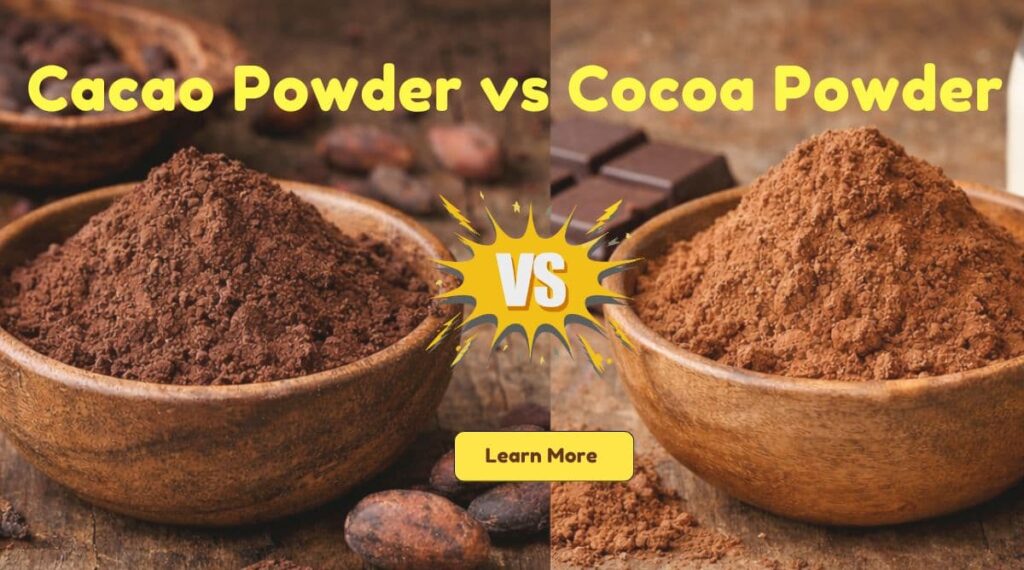
Cacao Powder vs Cocoa Powder
Cacao powder: This is made from beans that are processed at lower temperatures. After fermentation and drying, the beans are cold-pressed to remove fat (cacao butter) and then ground into powder. Because it’s less heated, cacao keeps more of its natural antioxidants, minerals, and plant compounds. The taste is stronger, slightly bitter, and more earthy — closer to what chocolate tastes like in its pure form.
Cocoa powder: This is made from beans roasted at higher temperatures. Roasting softens the sharp bitterness and creates a smoother, richer flavor that most people associate with classic chocolate desserts. Some cocoa powders are also alkalized (Dutch-processed), which makes them darker in color and milder in taste. While cocoa still contains nutrients, the higher heat slightly reduces some of cacao’s natural compounds.
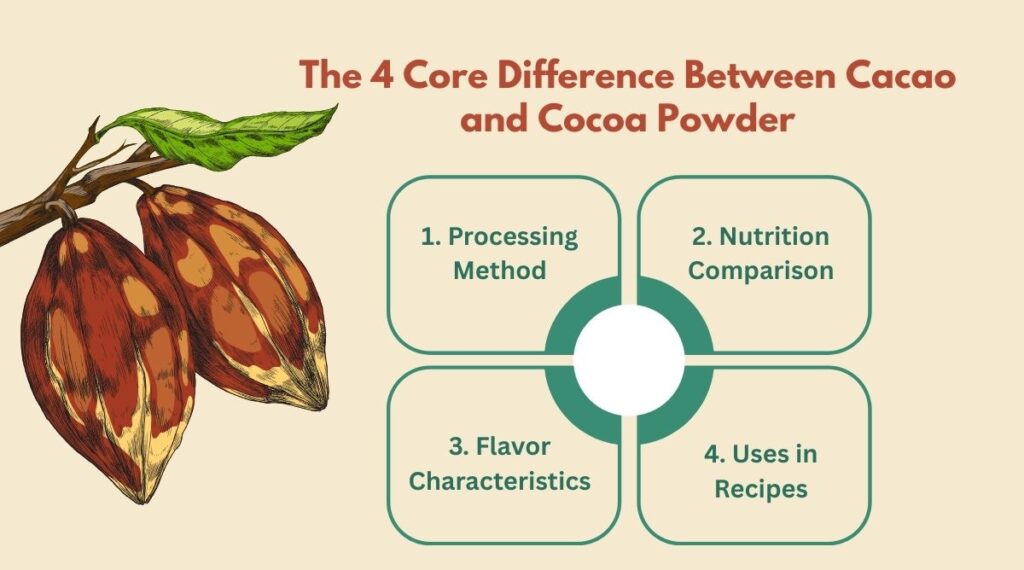
The Core Difference Between Cacao and Cocoa Powder
Cacao powder and cocoa powder look almost identical. They’re both dark, rich, and unmistakably chocolatey. But the real difference is not in appearance, it’s in how they are processed, what nutrients they retain, how they taste, and the way they behave in recipes.
So now we are going to understand the core differences that help you to choose the right one, depending on whether you care more about flavor, nutrition, or baking performance.
Let’s break it down into these 4 simple terms.
1. Processing Method
The biggest dividing line between cacao and cocoa is temperature.
Cacao powder is made from raw cacao beans that are fermented, dried, and processed at low temperatures. The goal is to preserve as many natural compounds as possible. The beans are cold-pressed to remove the fat (cacao butter), and what remains is ground into powder. Because heat is kept minimal, cacao stays closer to its natural, unaltered form.
Cocoa powder goes through roasting at high temperatures. This roasting step changes the chemical structure of the beans. It deepens the flavor, reduces bitterness, and makes the powder smoother and more familiar — the kind of chocolate taste most people grew up with.
Also Read: Cacao Powder Benefits
2. Nutrition Comparison: Cacao Powder vs Cocoa Powder
Here’s a simple comparison to make things clear
| Nutrient (per 10g) | Cacao Powder | Cocoa Powder |
| Antioxidants | Very high | Moderate |
| Magnesium | High | Lower |
| Iron | High | Moderate |
| Fiber | High | Medium |
| Natural fats | Yes | Usually reduced |
| Added chemicals | None (pure) | Often alkalized |
3. Flavor Characteristics
This is where most people immediately notice a contrast.
Cacao powder has a strong, bold, slightly bitter flavor. It tastes earthy, intense, and less sweet — closer to dark chocolate with a raw edge. Some people describe it as “wild” or “untamed.” It’s not the cozy hot cocoa flavor you might expect; it’s more complex and natural.
Cocoa powder tastes smoother, milder, and more familiar. Roasting mellows out the sharp notes and brings forward that comforting chocolate flavor we associate with cakes, brownies, and hot chocolate. Dutch-processed cocoa is even smoother and less acidic.
4. Uses in Recipes
Because of their processing differences, cacao and cocoa behave differently in the kitchen.
Cacao is best used in no-bake or low-heat recipes where you want to preserve its nutrients and bold flavor. Think smoothies, energy balls, raw desserts, chia pudding, or sprinkled over yogurt. Heating cacao at high temperatures can reduce the very compounds that make it nutritionally special.
Cocoa powder shines in baking. Cakes, brownies, cookies, and hot chocolate benefit from cocoa’s smoother taste and consistent performance under heat. Many baking recipes are developed specifically for cocoa powder, so swapping cacao can sometimes change the texture or flavor balance.
Health Benefits of Cacao Powder
Cacao powder earns its superfood status for good reason. Because it’s minimally processed, it keeps most of the nutrients found in raw cacao beans—and those nutrients actually make a difference.
Packed with Antioxidants
Cacao powder is naturally rich in antioxidants, especially flavonoids — plant compounds that help protect your cells from everyday stress and damage. In simple terms, they act like tiny bodyguards, supporting overall wellness and helping your body age a little more gracefully over time.
Good for Your Heart
Those same flavonoids aren’t just good for general health — they’re particularly friendly to your heart. Studies suggest cacao may help improve circulation and support healthy blood pressure levels. Regular cacao intake has often been linked with better cardiovascular function, making it a heart-smart addition to your routine.
A Top Source of Magnesium
Cacao is one of the best plant-based sources of magnesium, and most people don’t get enough of this mineral. Magnesium plays a big role in muscle recovery, nerve function, sleep quality, and even stress regulation. Adding cacao can be an easy, delicious way to top up your levels.
Naturally Lifts Your Mood
Ever notice how chocolate feels comforting? That’s not just in your head. Cacao contains natural compounds such as theobromine and phenylethylamine, which are associated with improved mood and mental clarity. It’s a small lift that can help you feel more focused and a little lighter mentally.
Smooth, Sustained Energy
Cacao gives you a smooth energy boost without the sharp spike and crash that coffee can bring. The energy feels more balanced, alert but calm, making it a great option for mornings or mid-day slumps when you want focus without the jitters.
Health Benefits of Cocoa Powder
While cocoa powder loses some nutrients during processing, it remains a surprisingly beneficial ingredient with its own set of wellness advantages.
Still nutritious, just more processed
Cocoa powder goes through higher heat during processing, so it loses a small portion of the nutrients found in raw cacao. But that doesn’t mean it’s empty — it still offers real benefits and can absolutely be part of a healthy diet.
Comfort that actually matters
Health isn’t only numbers on a nutrition label. Sometimes it’s about the emotional side of eating too. Cocoa has that classic chocolate flavor most of us grew up loving. It feels warm, familiar, and comforting — and that emotional satisfaction is part of a balanced lifestyle.
Provides antioxidant support
Even after processing, cocoa still contains antioxidants. The levels are lower than cacao, but they’re not gone. You’re still getting compounds that help fight everyday oxidative stress and support overall wellness.
Naturally low in calories
Unsweetened cocoa powder is surprisingly light. Since much of the cocoa butter is removed, it’s lower in fat and calories while still delivering rich flavor. That makes it a great option when you want a chocolate taste without adding heaviness to a recipe.
Can gently support mood
Cocoa retains many of the same mood-friendly compounds found in cacao. It may help support serotonin production, the chemical linked to feelings of calm and happiness. It’s one reason a warm cocoa drink can feel instantly uplifting after a long day.
Everyday Uses of Cacao and Cocoa Powder
Both cacao and cocoa powder are incredibly versatile; you can use them in everyday recipes to add rich chocolate flavor along with a nutritional boost.
Smoothies
Cacao powder blends beautifully into smoothies, especially when paired with banana, nut butter, oats, or dates. It adds deep chocolate flavor without needing extra sugar, while quietly boosting antioxidants and minerals. It’s an easy way to turn a basic smoothie into something that feels indulgent but still supports your health goals.
Oatmeal
A spoon of cacao or cocoa stirred into warm oatmeal instantly transforms a plain bowl into a chocolate breakfast. Add nuts, seeds, berries, or honey, and you’ve got a balanced meal that feels like dessert but fuels you for hours. Cacao works well for a more intense flavor, while cocoa gives that classic comforting taste.
Hot chocolate
Both powders shine in warm drinks. Cacao creates a richer, more earthy hot chocolate that feels almost ceremonial, while cocoa delivers the nostalgic flavor most people associate with childhood. Mixed with milk (or plant milk), a pinch of cinnamon, and a light sweetener, it becomes a cozy ritual rather than just a drink.
Baking
Cacao and cocoa can replace part of the flour in pancakes, muffins, brownies, and protein bars. This adds flavor depth without needing artificial chocolate flavoring. Cacao is ideal for nutrient-dense recipes, while cocoa is perfect when you want a familiar chocolate taste in traditional baking.
Energy Snacks
Mixed with nuts, oats, dates, and seeds, cacao powder works especially well in no-bake snacks. These quick energy bites are popular because they satisfy sweet cravings while delivering fiber, healthy fats, and minerals. Cocoa can be used the same way when you want a milder flavor profile.
Coffee and Lattes
A pinch of cacao or cocoa stirred into coffee or lattes adds complexity and smooth chocolate notes. It softens bitterness and creates a café-style drink at home. Many people prefer cacao here because the gentle energy boost pairs well with caffeine.
Savory Dishes
Chocolate isn’t only for sweets. In small amounts, cacao or cocoa can deepen savory dishes like chili, mole sauces, or slow-cooked stews. It adds richness and body without making the dish taste sweet — more like a background flavor enhancer.
Dessert Topping
Dusting cocoa over yogurt, fruit bowls, cappuccinos, or desserts adds visual appeal and flavor without extra sugar. It’s a simple trick chefs use to elevate presentation while keeping ingredients clean and minimal.
Buying Tips for Cacao and Cocoa Powder
Check the ingredient list
The best cacao or cocoa powder should have one ingredient: cacao or cocoa. That’s it. Avoid products with added sugar, artificial flavors, or fillers. Pure powder gives you full control over sweetness and quality.
Look for minimal processing
If you’re buying cacao powder, choose brands labeled raw or minimally processed. This usually means more nutrients are preserved. For cocoa powder, natural (non-alkalized) cocoa retains more antioxidants compared to heavily processed Dutch cocoa.
Choose unsweetened versions
Always go for unsweetened powder. Sweetened mixes are closer to dessert drink powders than real cacao or cocoa. Unsweetened options are more versatile and healthier for everyday use.
Pay attention to color and aroma
Good quality powder should smell rich and chocolatey, not dull or stale. Cacao tends to look lighter and more reddish-brown, while cocoa is usually darker. A flat smell often means an old or poorly stored product.
Organic is a smart choice
Cacao beans are heavily sprayed in conventional farming. Organic options reduce pesticide exposure and are often fresher because premium brands focus more on quality control.
Check the country of origin
Regions known for high-quality cacao, like Peru, Ecuador, and Ghana, often produce more flavorful powders. While not a strict rule, origin can be a good indicator of taste and sourcing standards.
Buy small, store fresh
Cacao and cocoa lose flavor over time. Buying smaller packs ensures freshness. Store in an airtight container away from heat and sunlight to preserve aroma and nutrients.
Price usually reflects quality
Extremely cheap powder is often over-processed or blended with lower-grade beans. You don’t need the most expensive option, but good cacao and cocoa are worth a little extra investment.
Common Myths Of Cacao Powder vs Cocoa Powder
Let’s clear up some confusion because there’s a lot of misinformation floating around.
Myth 1: Cacao and cocoa are completely different foods
Many people think they come from different plants, but both cacao and cocoa come from the same cacao bean. The real difference is processing. Cacao is less processed, while cocoa is heated at higher temperatures. They’re variations of the same ingredient, not separate foods.
Myth 2: All chocolate powders are healthy
Not every chocolate powder on the shelf is good for you. Many commercial mixes are loaded with sugar, milk solids, and additives. Pure cacao or unsweetened cocoa powder is very different from sugary drink mixes marketed as chocolate.
Myth 3: Cocoa has no nutritional value
Some assume cocoa is “empty calories” because it’s processed. In reality, cocoa still contains antioxidants, minerals, and plant compounds. It may have slightly fewer nutrients than raw cacao, but it’s far from useless nutritionally.
Myth 4: Cacao is always better than cocoa
Cacao is often marketed as the superior choice, but “better” depends on your goal. If you want maximum nutrients, cacao makes sense. If you prefer a smoother taste for baking or drinks, cocoa may actually be the better choice. Both can fit into a healthy lifestyle.
Myth 5: Chocolate causes instant weight gain
Plain cacao or cocoa powder by itself is low in calories. Weight gain usually comes from added sugar and fats in processed chocolate products — not from the powder itself. Used wisely, cacao and cocoa can be part of balanced eating.
Conclusion: Cacao Powder vs Cocoa Powder – Which Should You Choose?
At the end of the day, there’s no strict winner; it comes down to what you want from your chocolate.
If your priority is maximum nutrients and a more natural, earthy flavor, cacao powder is the better pick. It’s less processed, richer in antioxidants, and ideal for smoothies, health-focused recipes, and anyone trying to squeeze more nutrition into everyday meals.
If you care more about taste, comfort, and versatility, cocoa powder is a perfectly valid choice. It delivers that familiar chocolate flavor most people love, works beautifully in baking, and still offers nutritional benefits — just in slightly smaller amounts.
The good news? You don’t have to choose one forever. Many people keep both in their kitchen and use them differently depending on the recipe and mood. Cacao for wellness-focused days, cocoa for cozy baking and classic treats.
The real takeaway isn’t which powder is “better.” It’s understanding the difference so you can use each one intentionally and enjoy chocolate in a way that supports both your health and your happiness.
Top 10 FAQs of Cacao Powder vs Cocoa Powder
Is cacao powder healthier than cocoa powder?
Cacao powder generally contains more antioxidants and minerals because it’s less processed. That said, cocoa powder still offers benefits, so both can be part of a healthy diet.
Can I substitute cacao powder for cocoa powder in recipes?
Yes, in most recipes you can swap them 1:1. Just keep in mind cacao has a slightly more bitter, earthy flavor compared to cocoa.
Does cacao powder contain caffeine?
Cacao contains a small amount of natural caffeine, but much less than coffee. It also has theobromine, which provides a gentler energy boost.
Is cocoa powder processed chocolate?
Cocoa powder is made from cacao beans that have been roasted and processed. It’s still real chocolate — just treated with higher heat.
Which is better for baking: cacao or cocoa?
Cocoa powder is usually better for traditional baking because of its smoother flavor. Cacao works well in health-focused or raw recipes.
Can I drink cacao powder daily?
Yes, moderate daily consumption is generally safe for most people and may even offer health benefits, especially when unsweetened.
Why does cacao taste more bitter than cocoa?
Cacao is less processed and retains more of its natural compounds, which creates a stronger, more intense flavor.
Is Dutch-processed cocoa the same as cacao?
No. Dutch-processed cocoa is treated with an alkalizing agent to reduce acidity and darken the color. Cacao is raw and untreated.
Does cocoa powder still have antioxidants?
Yes. While processing reduces some antioxidants, cocoa powder still provides measurable antioxidant support.
Which should I choose for health benefits?
If your goal is maximum nutrition, cacao powder is the better option. If you want a balance between taste and benefits, cocoa powder works perfectly well.

Rylen
Writer of Ayurveda PowderRylan is a wellness writer focused on Ayurvedic powders, natural nutrition, and herbal remedies. He researches traditional ingredients and modern health science to create simple, practical guides that help readers make smarter lifestyle choices. His goal is to make Ayurveda easy to understand and useful in daily life.