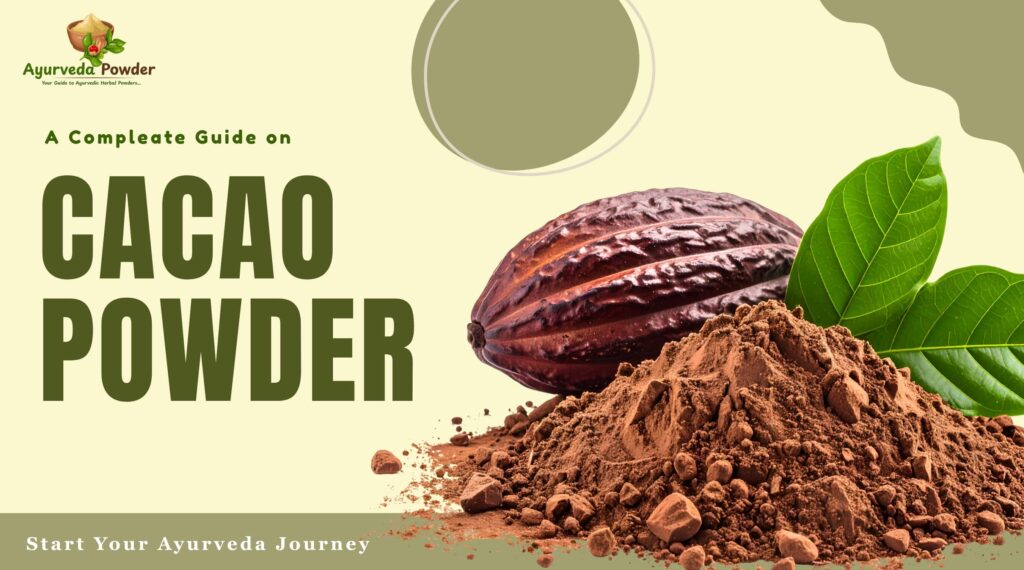
Cacao powder is more than just a chocolate ingredient it’s a nutrient-packed superfood that people have valued for centuries. If you love chocolate but want a healthier option, or you are simply curious about what makes cacao so special, you are in the right place. In this guide, we’ll explore what is cacao powder, its benefits, nutrition, everyday uses, and everything you need to know before adding it to your routine.
What is Cacao Powder?
Before we explore Cacao Powder first, we need to understand what cacao is. You know that amazing chocolate bar you love. That’s where cacao begins. Cacao (pronounced ka-kow) comes from the Theobroma cacao tree. The Fun fact is that its scientific name actually means “food of the gods” in Greek. And if I tell you honestly, once you taste real cacao, the name doesn’t feel exaggerated at all.
Cacao powder is a natural powder made from cacao beans that are fermented, dried, roasted, and then ground. Because it’s only minimally processed, it keeps most of its natural nutrients and rich flavor intact. It offers a rich chocolatey taste without added sugars or fats. Originating from the cacao tree (Theobroma cacao), native to Central and South America, cacao has been cherished for thousands of years not only as a food but also as a sacred ingredient in many indigenous cultures.
Also Read: Cacao Powder Benefits
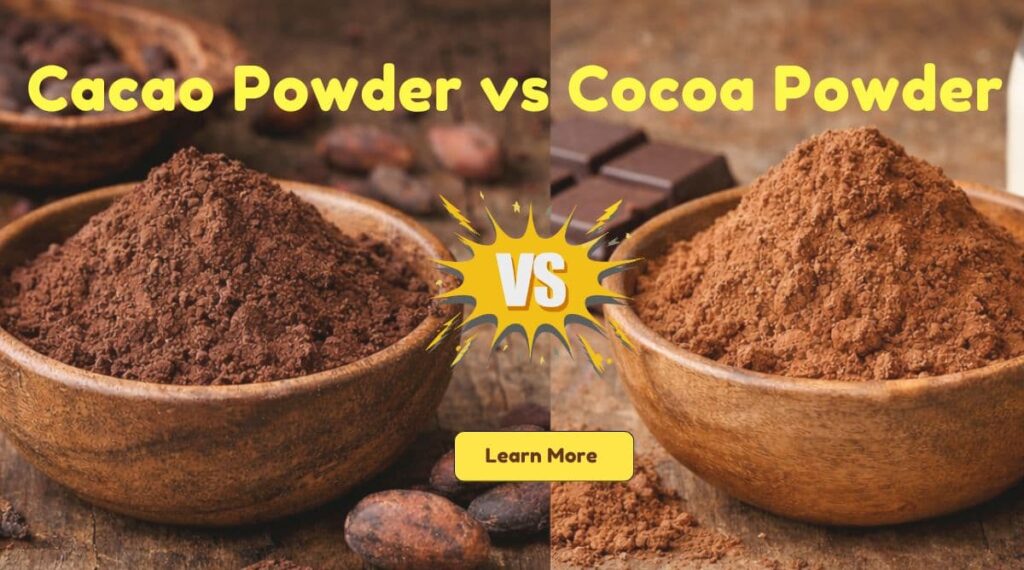
Difference Between Cacao Powder, Cocoa Powder, and Chocolate
You might have heard these terms used interchangeably, but they actually refer to different products:
| What is it? | Cacao Powder | Cocoa Powder | Chocolate |
|---|---|---|---|
| The simple explanation | Raw cacao beans are ground into powder with very little processing. This is chocolate in its most natural form. | This is cacao that’s been roasted at high temperatures. It’s what most of us grew up with in our pantries. | A finished chocolate product made from cocoa/cacao plus cocoa butter, sugar, and often milk. |
| How it’s processed | Cold-pressed at low temperatures to protect natural nutrients. The goal is to keep the bean as close to raw as possible. | Roasted at high heat before grinding. Roasting deepens the flavor but reduces some natural compounds. | Heavily processed and mixed with added ingredients like sugar, milk solids, vanilla, and stabilizers. |
| Taste profile | Strong, bitter, and earthy. Not sweet. Many people mix it with dates, honey, or bananas to balance the intensity. | Familiar chocolate flavor with mild bitterness. This is the classic baking cocoa taste. | Sweet, creamy, and indulgent. The sweetness level depends on whether it’s dark, milk, or white chocolate. |
| Nutritional benefits | Packed with antioxidants, magnesium, and iron. It’s basically a superfood! | Still has some antioxidants, but fewer than cacao due to the roasting process. | Depends entirely on the type—dark chocolate has more benefits, while milk chocolate is higher in sugar and lower in actual cocoa content. |
| Best used for | Smoothies, protein shakes, energy balls, oatmeal, or healthy desserts. Great when you want a chocolate flavor without added sugar. | Brownies, cakes, hot cocoa, and classic baking recipes. It’s your go-to for traditional chocolate flavor. | Snacking, melting for ganache, chocolate chip cookies, or just eating straight from the wrapper (no judgment here!). |
| Price point | Usually higher priced because it’s less processed and often organic. | Affordable and easy to find at any grocery store. | Wide range. It can be very cheap or premium artisan chocolate, depending on the brand and quality. |
Read Also: Cacao Powder vs Cocoa Powder: What’s the Real Difference?
The Amazing Health Benefits of Cacao Powder
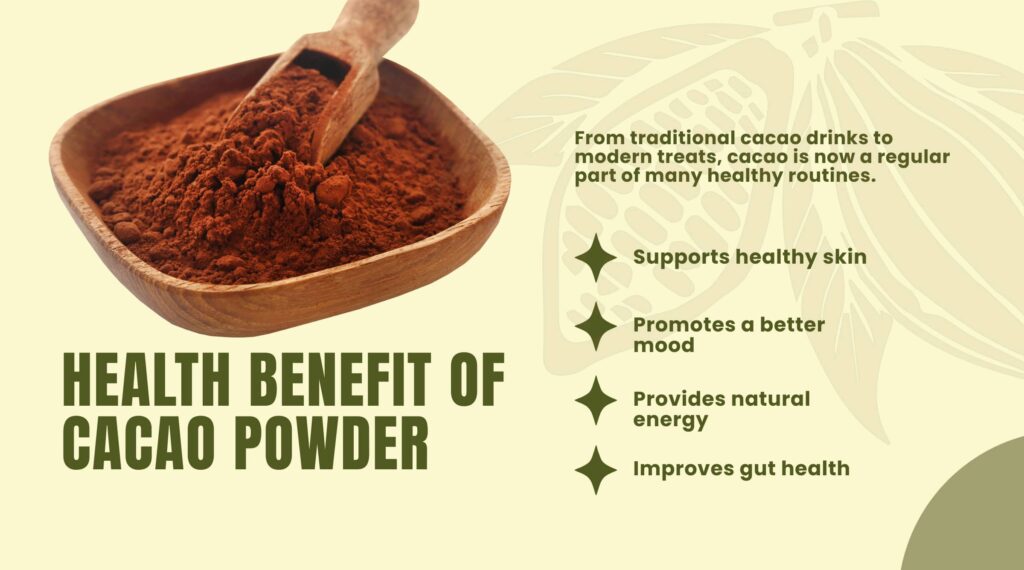
Cacao powder isn’t just the thing that gives chocolate its rich flavor — it’s actually one of the most nutrient-dense plant foods you can add to your diet. When used regularly (and in moderation), it can support your heart, brain, skin, energy levels, and even digestion. Here’s what makes cacao so special:
Cacao Powder for Heart Health
Your heart loves cacao more than you might expect. Cacao powder is packed with antioxidants called flavonoids, which help support healthy blood flow and circulation. Good circulation means your heart doesn’t have to work as hard to do its job.
Some research suggests that cacao may help maintain healthy blood pressure and reduce inflammation two important factors for long-term heart health. Adding a spoonful of cacao to your smoothie or oatmeal is a small habit that can gently support your cardiovascular system over time.
Cacao Powder for Brain & Mood
Ever notice how chocolate makes you feel a little happier? That’s not just in your head. Cacao naturally contains compounds that support brain chemistry and mood balance.
It’s rich in magnesium (a calming mineral many people are low in) and contains feel-good compounds that may promote relaxation and focus. Many people say cacao gives them a subtle mood lift and clearer thinking without the anxiety or crash that strong coffee can cause.
Also Read: Cacao Powder Uses
Cacao Powder for Energy
Cacao provides energy, but in a smoother way than caffeine. Instead of a quick spike followed by a crash, cacao contains theobromine, a natural stimulant that works more gradually.
The result include:
- Steady energy
- Better endurance
- Less jitteriness
That’s why cacao is popular in pre-workout drinks and morning smoothies. It wakes you up without overwhelming your nervous system.
Cacao Powder for Skin
Healthy skin isn’t only about what you put on your face, it’s also about what you put in your body. The antioxidants in cacao help protect your cells from oxidative stress, which plays a role in premature aging.
Regular cacao intake has been linked to improved blood flow to the skin, which may support hydration, elasticity, and a natural glow. It’s not magic, but over time it can contribute to healthier-looking skin from the inside out.
Cacao Powder for Digestion
Cacao powder also supports your gut. It contains fiber and plant compounds that feed beneficial gut bacteria, which are essential for digestion and overall health.
A healthier gut can mean these things:
- More regular digestion
- Less bloating
- Better nutrient absorption
When your digestive system runs smoothly, your whole body tends to feel better, and cacao can be a simple addition that helps support that balance.
How to Use Cacao Powder
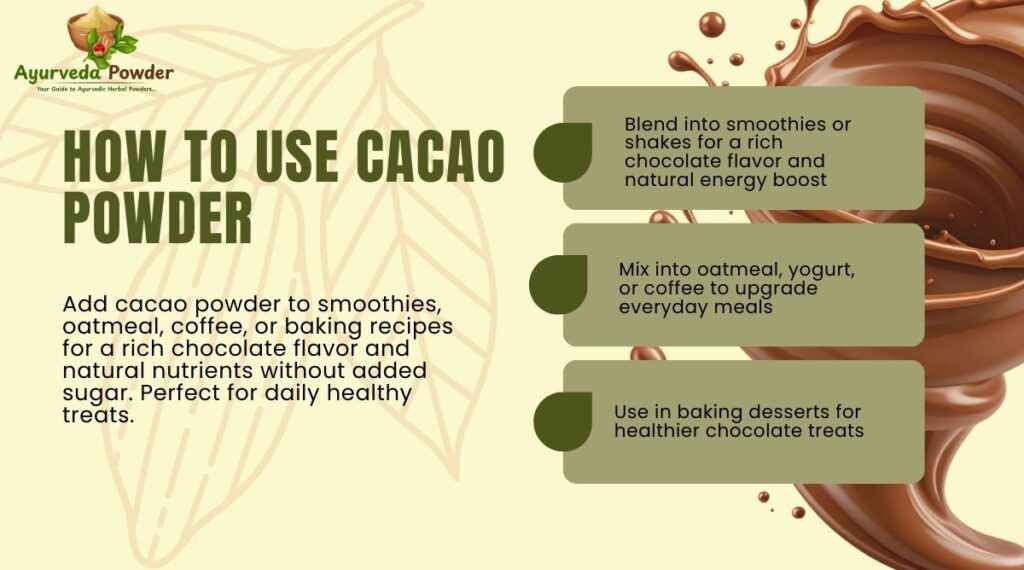
Popular culinary uses: smoothies, hot drinks, baking, and desserts
Cacao powder is incredibly versatile. Use it in smoothies for a natural energy boost, prepare hot cacao drinks, or incorporate it into baking, think brownies, muffins, and energy balls. It’s perfect for creating delicious cacao powder recipes like cacao powder brownies or healthy desserts.
Creative recipes for a healthy lifestyle
Try adding cacao powder to oatmeal, yogurt, or homemade granola. Use it in raw energy bites or sprinkle over fruit for a nutritious snack. Its rich flavor pairs well with nuts, berries, and herbal powders like turmeric or maca.
Tips for adding cacao powder to your daily diet
Start with a teaspoon daily, gradually increasing as tolerated. Mix it into your morning smoothie, sprinkle it over your breakfast, or blend it into herbal teas. Remember, moderation is key, especially if you’re sensitive to caffeine.
Combining cacao powder with other superfoods and herbal powders
Combine cacao with superfoods like spirulina, maca, or chia seeds for enhanced nutritional benefits. In Ayurveda, cacao can be paired with adaptogenic herbs to support balance and vitality.
How to Choose the Best Cacao Powder
Choosing cacao powder might sound simple “Isn’t powder just powder?” — but the truth is, not all cacao is created equal. If you want the real health benefits (and great taste), here are the key things you should pay attention to:
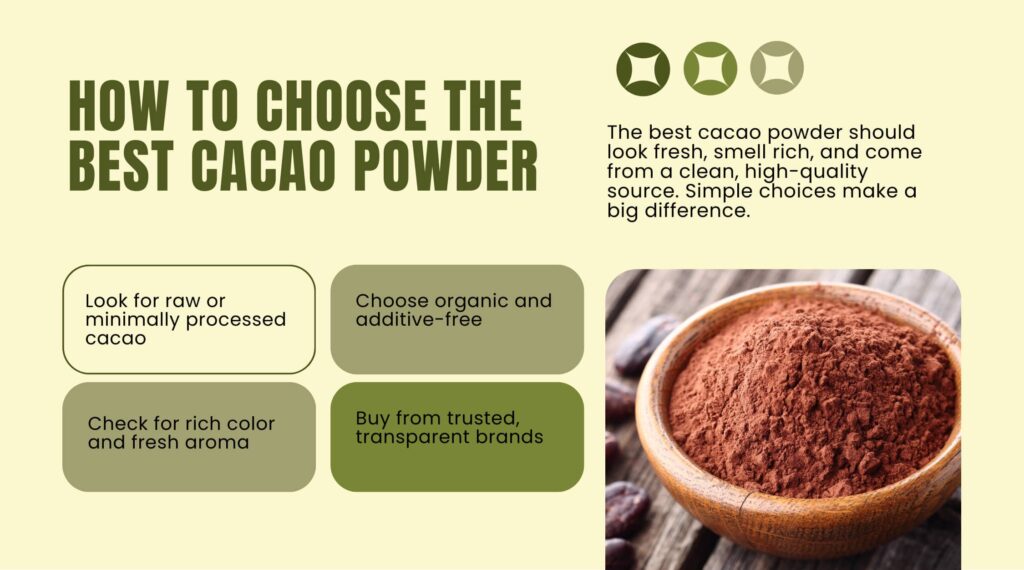
Cacao Percentage, Processing methods and Origin
Whenever you go to buy cacao powder Look for powder with a high cacao percentage (70% or higher) for maximum nutrients. Cold-pressed or raw organic cacao retains more antioxidants and nutrients. Origin matters, South American cacao is often prized for its quality and flavor.
Organic vs Conventional Cacao Powder
Organic cacao powder is grown without synthetic pesticides or chemicals, so it’s a cleaner and safer choice. It’s usually processed more gently, which helps preserve more antioxidants and nutrients. Conventional cacao may go through heavier processing and can contain pesticide residues, so if you’re buying cacao for health benefits, organic is generally the better option.
Read Labels Carefully
Good cacao powder should have just one ingredient: cacao. Avoid products with added sugar, fillers, or artificial ingredients. A short, simple ingredient list usually means you’re getting a purer, higher-quality product.
Also Read: Cacao Powder Types
Look for Certifications
Certifications like USDA Organic and Fair Trade show that the cacao was grown responsibly and without harmful chemicals. They also support ethical farming and sustainable practices, which is better for both you and the environment.
How to store cacao powder for freshness and potency
Store cacao powder in an airtight container in a cool, dark place. Proper storage preserves its flavor, aroma, and nutritional benefits.
Trusted brands and where to buy high-quality cacao powder
You Can Look for reputable brands like Navitas Organics, Sunfood, or Viva Naturals. Many health food stores and online retailers offer organic raw cacao powder My one advise is for you please always check for certifications and reviews for best quality.
Safety Tips and Precautions for Beginners
Cacao powder is generally safe for most people, but like anything you add to your diet, it’s smart to start slow and pay attention to how your body reacts.
Recommended daily intake and moderation
A good beginner amount is about 1–2 teaspoons per day. That’s enough to enjoy the benefits without overdoing it. Since cacao contains natural stimulants similar to caffeine, too much can make some people feel jittery or restless.
Possible allergies and sensitivities
While rare, some people may be sensitive to cacao. If you notice headaches, stomach discomfort, or unusual reactions, stop using it and see how you feel. Everyone’s body is different.
Interactions with medications and health conditions
Cacao contains caffeine and other bioactive compounds that may interact with medications or health conditions like hypertension or anxiety. Always consult your healthcare provider before adding cacao powder to your routine.
Ensuring purity and avoiding contaminants
Go for organic, certified cacao powder whenever possible. This reduces the risk of contaminants and ensures you’re getting a purer product.
Consulting with healthcare professionals
If you’re pregnant, nursing, or managing a medical condition, a quick conversation with a healthcare provider can give you peace of mind before adding cacao to your routine.
Conclusion
Cacao powder is more than just a chocolate ingredient; it’s a nutrient-rich superfood that can support your mood, heart, energy levels, and overall wellness. From smoothies to baking, it’s one of those rare foods that’s both healthy and genuinely enjoyable to use every day.
Have fun experimenting with it. Try new recipes, explore different flavors, and see what works best for your routine. Just remember to choose high-quality organic cacao and use it in moderation so you get the benefits without overdoing it.
If you’re new to cacao, start small and build from there. You can mix it into simple recipes like brownies or drinks, or even combine it with other herbal powders for extra support. Think of cacao as a small daily ritual, a delicious way to add nourishment and balance to your lifestyle.
Top 10 FAQs About Cacao Powder
What is cacao powder made from?
Cacao powder comes from raw cacao beans. The beans are fermented, dried, and cold-pressed to remove most of the fat (cacao butter), then ground into powder.
Is cacao powder the same as cocoa powder?
No. Cacao is less processed and kept closer to raw. Cocoa is roasted at high heat, which changes the flavor and reduces some nutrients.
Is cacao powder healthier than cocoa powder?
Cacao powder usually has more antioxidants and minerals because it isn’t heavily roasted. That’s why many people choose it for health-focused recipes.
Does cacao powder taste like chocolate?
Yes, but it’s more bitter and earthy. It’s not sweet like chocolate bars. Most people mix it with honey, bananas, or dates.
Does cacao powder contain caffeine?
Yes, but only a small amount. It also contains theobromine, a natural compound that provides a gentle energy boost without the crash of coffee.
Is cacao powder good for weight loss?
It can support a healthy diet because it’s low in sugar and high in fiber. But it’s not a magic weight-loss food, it works best as part of balanced eating.
What is the best time to consume cacao powder?
Morning or early afternoon is ideal Its gives a natural energy lift. Many people take it before workouts or as a mid-day boost.
Can you take cacao powder daily?
Yes, most people can enjoy it daily in moderate amounts. A teaspoon is common Just don’t overdo it if you’re sensitive to caffeine.
Is cacao powder safe during pregnancy?
Small amounts are generally safe, but cacao still contains natural stimulants. It’s best to ask a doctor if you’re unsure.
What is the shelf life of cacao powder?
Cacao powder typically lasts 2–3 years when stored properly. If the smell fades or tastes stale, it’s time to replace it.

Rylen
Writer of Ayurveda PowderRylan is a wellness writer focused on Ayurvedic powders, natural nutrition, and herbal remedies. He researches traditional ingredients and modern health science to create simple, practical guides that help readers make smarter lifestyle choices. His goal is to make Ayurveda easy to understand and useful in daily life.